About Bar Breaking Apparatus
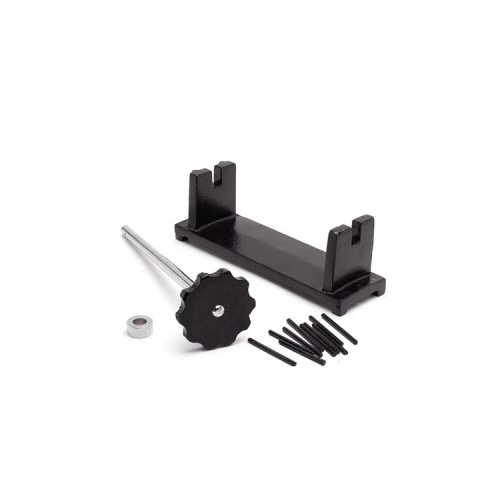
LAB TESTING FIXTURE
This laboratory testing fixture is designed for precision positioning and support in laboratory, research, and industrial testing applications. Manufactured with durable metal construction, it provides stable performance and reliable operation during testing procedures.
FEATURES:
Heavy-duty metal construction
Stable and durable design
Easy installation and operation
Precision support system
Compact and lightweight structure
Low maintenance
APPLICATIONS:
Laboratory testing
Research applications
Scientific experiments
Industrial testing setups
Educational laboratory use
BENEFITS:
Reliable and stable performance
Easy handling and adjustment
Durable and long-lasting structure
Suitable for routine laboratory work
Reliable Breaking Strength Testing for LaboratoriesThis apparatus allows educators and students to accurately demonstrate and verify the breaking strength of metallic bars and rods. With a durable powder-coated mild steel frame complemented by brass and stainless-steel core components, the device ensures reliability and longevity in frequent laboratory use. Its portable size and manual operation make it suitable for a wide range of classroom setups.
Flexible and Customizable for Experimental NeedsAvailable with optional accessories such as a digital force gauge and a heating water bath, the apparatus can accommodate various experimental requirements. The temperature-compatible design allows for testing at both ambient and elevated temperatures (up to 100C), supporting a deeper understanding of material behavior under thermal stress.
Easy to Use, Calibrate, and MaintainFeaturing an intuitive analog scale and a user-friendly loading mechanism, the apparatus can be quickly calibrated and readied for demonstrations. Manual operation removes the need for an external power source, making the unit a practical and cost-effective solution for any teaching laboratory.
FAQ's of Bar Breaking Apparatus:
Q: How do you operate the Bar Breaking Apparatus in a teaching laboratory?
A: The Bar Breaking Apparatus is operated manually using a hand lever. Specimens (bars or rods) are placed securely between the specimen holders, and force is gradually applied through the loading mechanism until the bar breaks. The force at breakage is read from the analog scale.
Q: What sizes and materials of specimens can this apparatus test?
A: This equipment is designed to test bars between 4 mm and 12 mm in diameter and up to 300 mm long. It accommodates various metals commonly used in mechanical and educational testing environments.
Q: When is it beneficial to use the optional heating water bath accessory?
A: The heating water bath is useful when experiments require evaluating the breaking strength of bars at elevated temperatures, up to 100C. This helps simulate real-world thermal conditions for materials under load, enhancing the learning and research experience.
Q: Where can this apparatus be installed or used effectively?
A: Its portable, table-top model and compact dimensions (600mm x 150mm x 300mm) make it ideal for placement in classrooms, teaching laboratories, or research settings without the need for a permanent installation.
Q: What is the process for calibrating the analog scale?
A: Calibration is straightforward: ensure the device is unloaded, set the scale to zero, and verify its accuracy with standard weights or calibrated force gauges as recommended in the user manual. Regular calibration maintains test accuracy.
Q: How does the apparatus benefit mechanical strength testing in educational environments?
A: It provides hands-on experience in determining breaking strength, offers visual and practical demonstrations of mechanical properties, and allows students to understand testing principles without complex electronics or power requirements.
Q: What safety and compliance standards does the Bar Breaking Apparatus meet?
A: The apparatus conforms to recognized standard test methods for breaking strength measurement, and its corrosion-resistant construction enhances user safety and durability during frequent laboratory use.






 Send Inquiry

 Send Inquiry
 Send Inquiry
 Send SMS
 Call Me Free