About LABORATORY HOT PLATE ( RECTANGULAR)
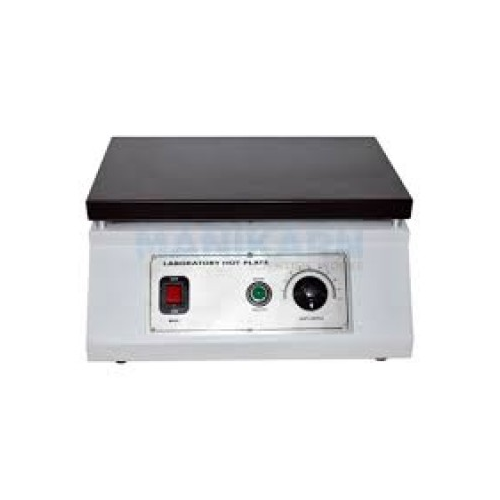
LABORATORY HOT PLATE RECTANGULAR
The Laboratory Hot Plate Rectangular is a reliable heating device designed for uniform and controlled heating of laboratory samples, chemicals, and solutions. It is widely used in educational institutions, research laboratories, pharmaceutical facilities, and industrial testing environments.
FEATURES
Rectangular heating surface
Uniform heat distribution
Temperature control adjustment
Robust and durable construction
Easy to operate and maintain
Compact laboratory design
APPLICATIONS
Research laboratories
Educational institutions
Chemical laboratories
Pharmaceutical industries
Industrial testing facilities
BENEFITS
Provides consistent heating performance
Enhances laboratory efficiency
Simple and safe operation
Long service life
Suitable for routine laboratory applications
Precision Heating for Laboratory ApplicationsDesigned for reliability, the rectangular laboratory hot plate delivers consistent and uniform heating, making it suitable for scientific, industrial, and educational laboratories. The selection of polished stainless steel for the top plate ensures resistance to corrosion while facilitating easy cleaning. Wide plate size options enable compatibility with different flask and beaker sizes, streamlining experimental workflows.
Enhanced Control and Safety MechanismsChoose between thermostatic or advanced digital temperature controls to suit model preferences, ensuring accurate temperature maintenance from ambient up to 300C. Safety is prioritized through overheat protection and visible pilot lights, allowing secure operation in busy lab environments. The inclusion of mineral wool insulation prevents heat loss, thus maximizing efficiency.
Robust and Durable ConstructionThe laboratory hot plate's powder-coated mild steel construction delivers long-lasting performance with superior resistance to rust and corrosion. Its sturdy design supports flask and beaker loading up to 1-2 liters, making it suitable for most laboratory heating tasks. The energy-saving design further enhances its operational lifespan and reliability for regular laboratory use.
FAQ's of LABORATORY HOT PLATE ( RECTANGULAR):
Q: How do I operate the rectangular laboratory hot plate safely?
A: To operate the hot plate, place your vessel on the polished stainless steel surface, set your desired temperature using the thermostatic control or digital display (model dependent), and switch on the power. Always monitor the temperature and use the pilot indicator light as a safety reference. Overheat protection and insulated construction ensure user safety, but it is important not to leave the equipment unattended when in use.
Q: What benefits does a stainless steel top plate provide?
A: The polished stainless steel top plate offers excellent corrosion resistance, making it ideal for laboratory environments that may involve spills or exposure to chemicals. It also ensures a flat, uniform surface for even heat distribution and simplifies cleaning after usage.
Q: When should I use the thermostatic versus the digital temperature controller?
A: Thermostatic controls are suitable for basic applications requiring steady temperatures, while digital temperature controllers provide precise, real-time temperature monitoring and control, making them preferable when experiments demand exact temperature accuracy within 5C. Choose based on the sensitivity of your laboratory process.
Q: Where can this laboratory hot plate be installed?
A: The hot plate should be installed on a stable, level, and heat-resistant surface within a well-ventilated laboratory setting. Avoid placing it near flammable materials and ensure convenient proximity to a 220-240V AC power source.
Q: What is the maximum temperature and loading capacity of this model?
A: Depending on the specific model, the laboratory hot plate can reach temperatures from ambient to 300C and can handle up to 1-2 liters of liquid, ideal for small to medium-sized laboratory tasks.
Q: How does the hot plate minimize heat loss during operation?
A: Mineral wool insulation is used within the hot plate's core to minimize heat loss, ensuring the surface temperature remains consistent and energy is used efficiently, thus enhancing overall performance and safety.







 Send Inquiry

 Send Inquiry
 Send Inquiry
 Send SMS
 Call Me Free