About Four Probe Method
FOUR PROBE METHOD APPARATUS
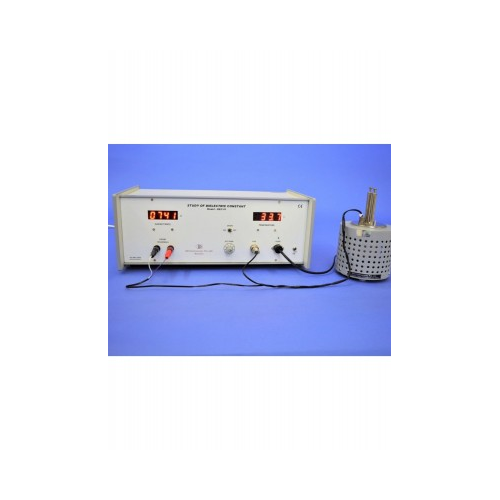
The Four Probe Method Apparatus is a precision laboratory instrument used for measuring the electrical resistivity and conductivity of semiconductor materials. It is widely utilized in physics laboratories, research institutions, engineering colleges, and material science studies for accurate characterization of conductive and semiconductor samples.
FEATURES
High accuracy measurement system
Digital display for precise readings
Stable current source
Reliable probe arrangement
Durable laboratory construction
Easy operation and calibration
APPLICATIONS
Semiconductor research
Physics laboratories
Material science studies
Engineering institutions
Educational demonstrations
BENEFITS
Provides accurate resistivity measurements
Supports advanced material analysis
Enhances practical laboratory learning
Reliable and repeatable results
Suitable for research and educational applications
Precise Semiconductor CharacterizationThe Four Probe Method apparatus (FP-200) offers a highly accurate solution for measuring the resistivity and conductivity of small semiconductor samples. Its collinear four-probe system with 1 mm spacing ensures reliable results, while integrated digital temperature control enables testing across a wide thermal range for comprehensive material analysis.
Thoughtful Design for Laboratory UseCompact yet robust, the FP-200 features a powder-coated mild steel body and stainless steel probes for durability. The unit's spring-loaded sample placement, intuitive digital readout, and handy digital temperature controller simplify operation, while the manual automation grade allows direct user supervision during measurements.
Reliable Results with Advanced FeaturesThis apparatus incorporates a cartridge heating system and natural air cooling for consistent sample conditioning. CE compliance, high-precision readings, and easy-to-operate controls position the FP-200 as a dependable instrument for demanding laboratory environments.
FAQ's of Four Probe Method:
Q: How does the Four Probe Method apparatus measure the resistivity of semiconductor samples?
A: The apparatus utilizes four collinear probes with fixed 1 mm spacing to inject current and measure voltage across the semiconductor. The direct digital meter displays voltage and current values, from which the resistivity and conductivity are calculated based on the sample geometry and probe arrangement.
Q: What is the process for placing a sample in the FP-200 apparatus?
A: Samples, up to 10 mm x 10 mm, are positioned on the spring-loaded platform to ensure stable contact with all four stainless steel probes. This mechanism ensures uniform pressure, facilitating accurate measurements during the testing process.
Q: When should I use the digital temperature controller during an experiment?
A: The digital temperature controller is used to set and maintain the desired temperature (up to 200C) for the sample during testing. This is especially important when investigating temperature-dependent properties of semiconductors, as material behavior can vary with temperature.
Q: Where is the FP-200 best operated for optimal performance?
A: Optimal performance is achieved in an indoor, dust-free, temperature-controlled laboratory environment. Such conditions prevent contamination and ensure reliable, repeatable measurements.
Q: What are the key benefits of using the FP-200 Four Probe Method apparatus?
A: The FP-200 offers high accuracy (within 1% of reading), compact design, and user-friendly operation. Its digital readout, secure sample placement, and precise temperature control enhance measurement reliability and repeatability.
Q: How many samples can be tested at once with this apparatus?
A: The FP-200 is designed to test one sample at a time, ensuring controlled conditions and focused, accurate measurements for each specimen.
Q: What type of materials are suitable for measurement with this device?
A: This apparatus is ideal for measuring the resistivity and conductivity of small semiconductor samples within the stated dimensions. It's commonly used in research and educational laboratories for material science studies.






 Send Inquiry

 Send Inquiry
 Send Inquiry
 Send SMS
 Call Me Free