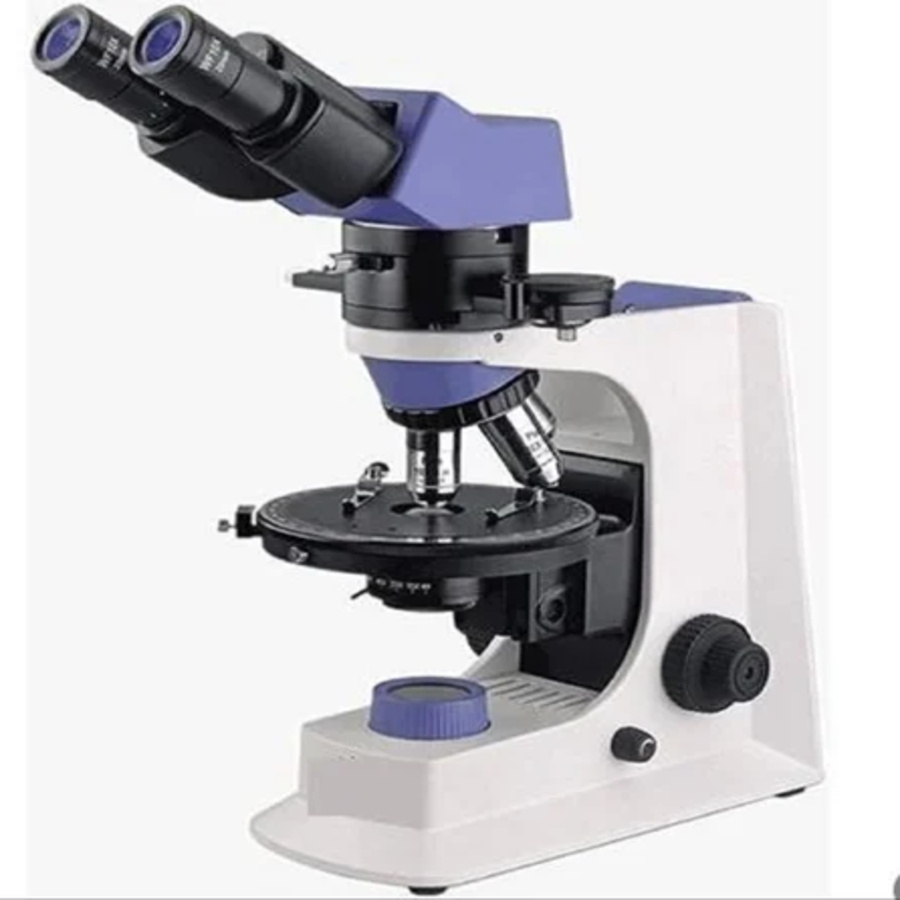
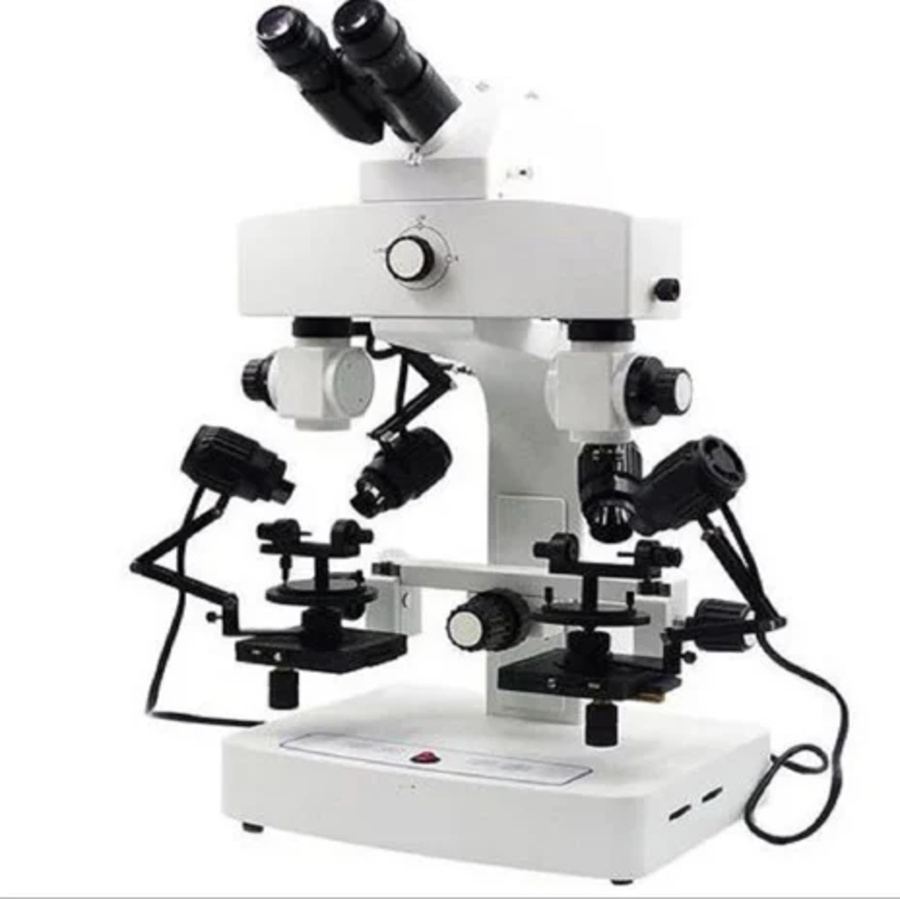
About Conxport Upright Polarizing Microscope
| Magnification |
40x |
| Usage/Application |
Laboratory |
| Is It Portable |
Portable |
| Illumination |
LED 3.3W/3V |
| Nosepiece |
Quadruple |
| Material |
Staleness Steel |
Eyepiece Wide Field (WF) 10, 20 mm; includes a reticule 10-20 mm (Crosshair reticule 0.1 mm) Objectives Infinity Plan objectives: 4, 10, 20(s), 40(s) Viewing Head Binocular or Trinocular head; rotatable 360; interpupillary distance (IPD) 50-75 mm Nosepiece Quadruple (4-position) nosepiece Mechanical Stage Rotatable 360; centre adjustable; graduated; with Venire reading 6 (minutes) Condenser Abbe condenser, numerical aperture (N.A.) 1.25, with iris diaphragm Focus (Focusing Control) Coaxial coarse and fine focus knobs on both sides, large knobs; includes tension / torque adjustment; coarse/fine strokes given (coarse stroke 22 mm, fine stroke 100 m) Polarizing System Polarizer / analyzer; includes Bertrand lens; (lambda) slip-red, quarter-wave plate (1/4 ), Quartz wedge Illumination LED, 3.3 W / 3 V; transmission illumination; ISO-CE compliant Power / Voltage Universal power supply, 110-240 V, 50/60 Hz Magnification Range With the eyepiece and listed objectives, magnification up to 40 (or more depending on (s) objectives)
Advanced Laboratory OpticsThe Conxport Upright Polarizing Microscope stands out for detailed laboratory analysis, equipped with robust stainless steel construction. Its quadruple nosepiece and integrated circular mechanical stage allow seamless switching and sample maneuvering, making intricate research simple and efficient.
Portable and Versatile DesignEngineered for laboratory professionals in India, this portable microscope adapts to various workspaces. The detachable analyzer and rotatable polarizer make the investigation of polarizing properties straightforward, supporting both routine and complex examinations with consistent results.
FAQ's of Conxport Upright Polarizing Microscope:
Q: How do I operate the Conxport Upright Polarizing Microscope for laboratory analysis?
A: To use this microscope, start by selecting the desired objective on the quadruple nosepiece. Place your specimen on the circular mechanical stage, secure it, and adjust the coarse and fine focusing system for clarity. Use the rotatable polarizer and detachable analyzer to enhance image contrast as needed.
Q: What benefits does the rotatable polarizer and detachable analyzer offer?
A: The rotatable polarizer allows users to observe changes in a specimen's optical characteristics, while the detachable analyzer lets you analyze varying polarization states. This combination is valuable for materials science, geology, and forensic laboratories, providing more flexible observation options.
Q: When is it recommended to use the coarse and fine focusing system?
A: Utilize the coarse focusing system for rapid adjustments when initially viewing samples. Refinement with the fine focusing mechanism ensures sharpness and detail, especially important at the microscope's 40x magnification for precise analyses.
Q: Where can this portable microscope be effectively used?
A: Due to its portability, the microscope is suited for laboratory environments, fieldwork, or educational settings requiring detailed optical studies. Its robust build and compact form make it easy to transport and set up within various research and teaching spaces.
Q: What is the process for switching between different magnification levels?
A: To change magnification, rotate the quadruple nosepiece to select the desired objective lens. Ensure the specimen is centered on the stage, then refocus using the coarse and fine adjustments for optimal image clarity.
Q: How does the integrated LED illumination enhance usage?
A: The built-in LED illumination (3.3W/3V) offers bright, consistent light, increasing visibility for fine specimen details. LED technology also consumes less power and lasts longer than traditional bulbs, ensuring reliable operation during extended laboratory sessions.
Q: What advantages does stainless steel construction provide for laboratory microscopes?
A: Stainless steel gives the Conxport Microscope enhanced durability, resistance to corrosion, and long-term stability. This ensures the instrument remains reliable through frequent use, providing consistent performance in laboratories and educational institutions.






 Send Inquiry

 Send Inquiry
 Send Inquiry
 Send SMS
 Call Me Free