About Hope"s Appartus
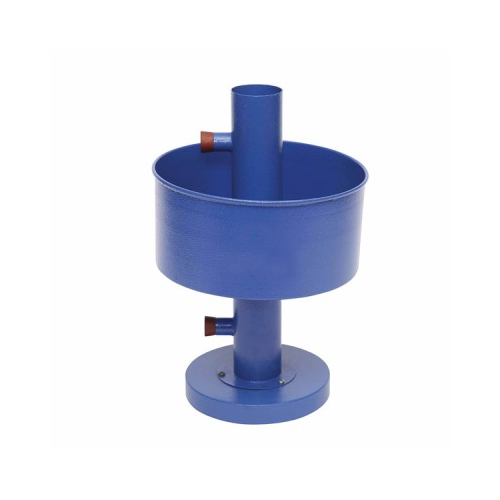
LABORATORY TESTING CONTAINER
This laboratory testing container is designed for precision testing, sample handling, and research applications in laboratories and educational institutes. Manufactured with durable construction and a stable base design, it provides reliable performance for routine laboratory work.
FEATURES:
Durable metal construction
Stable base structure
Compact and lightweight design
Easy operation and handling
Reliable laboratory accessory
Low maintenance
APPLICATIONS:
Laboratory testing
Research applications
Educational institutes
Scientific experiments
Industrial laboratory use
BENEFITS:
Reliable and stable performance
Easy handling and operation
Durable and long-lasting design
Suitable for routine laboratory work
Demonstrate Water's Anomalous ExpansionHope's Apparatus provides a clear, visual representation of water's unusual expansion between 0C and 10C. By observing the liquid level in the borosilicate glass tube, students gain hands-on experience in understanding this fundamental physical phenomenon, which is crucial in physics education and laboratory demonstrations alike.
Premium Build for Academic UseConstructed with high-quality borosilicate glass, a sturdy lacquered wooden base, and a durable metal cylinder, the apparatus is designed to withstand repeated laboratory use. Its polished glass finish ensures both aesthetic appeal and resilience. Each component arrives separately for straightforward assembly in educational settings.
FAQ's of Hope"s Appartus:
Q: How does Hope's Apparatus visually demonstrate the anomalous expansion of water?
A: Hope's Apparatus allows users to observe water level changes in a glass tube as the temperature is adjusted between 0C and 10C. The unique density behavior of water within this range causes the level in the tube to rise or fall, making its expansion or contraction easily visible for demonstration purposes.
Q: What components are included in the standard Hope's Apparatus model?
A: The standard Physics-Hope-Std model comes with a borosilicate glass tube, a 100 ml glass flask, a metal cylindrical jacket, a polished lacquered wooden base, and a beaker. A thermometer may be optionally added for more precise temperature monitoring.
Q: When should Hope's Apparatus be used in educational settings?
A: This apparatus is best utilized during physics laboratory lessons focused on thermodynamics or density anomalies, particularly when studying the unique expansion characteristics of water between 0C and 10C. It is suitable for demonstrations in both secondary schools and college-level physics courses.
Q: Where is Hope's Apparatus commonly set up and used?
A: Hope's Apparatus is typically set up in school and college laboratories. Assembly requires access to an external heat source, such as a water bath or ice bath, to achieve precise temperature control during demonstrations.
Q: What is the process for assembling and using Hope's Apparatus?
A: To assemble, attach the glass tube, flask, and metal cylinder to the lacquered wooden base. Fill the flask with water and place the entire setup in an external water or ice bath. Adjust the temperature and observe the water level changes in the tube, which demonstrate the density anomaly.
Q: What are the main benefits of using Hope's Apparatus in physics education?
A: Using Hope's Apparatus offers a tangible way for students to visualize the unique behavior of water as it expands or contracts, reinforcing theoretical knowledge through direct observation. It enhances engagement and deepens understanding of important physical concepts.






 Send Inquiry

 Send Inquiry
 Send Inquiry
 Send SMS
 Call Me Free