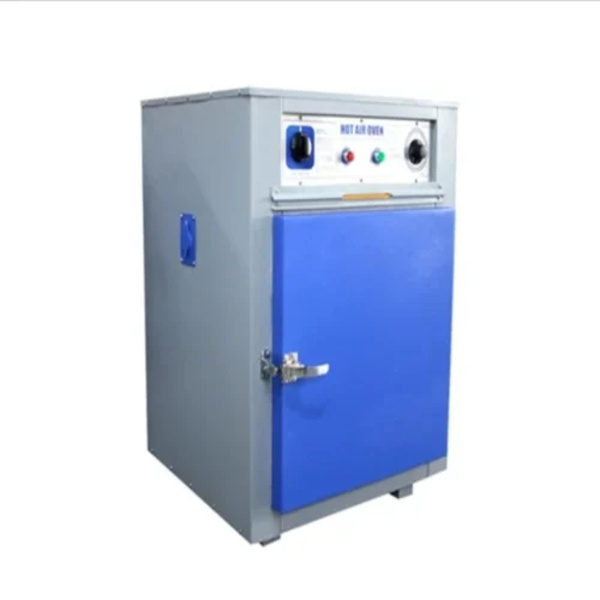
About Hot Air Oven
| Capacity |
45 liter |
| Material |
Stainless Steel |
| Chamber Size (W*H*D) mm |
14x14x14 cm |
| Usage/Application |
Laboratory |
| No Of Trays |
2 |
| No Of Chamber |
1 |
A typical 45-liter stainless steel hot air oven includes a temperature range of roughly ambient +5C to 250C, a digital display with a microcontroller, two wire mesh shelves, and a SS304 grade stainless steel internal chamber with high-grade insulation. Key features often include forced air circulation for uniform heating, safety features like over-temperature protection, and a durable powder-coated outer body.
Durable Double-Wall DesignThe oven's sturdy double-wall construction, paired with mineral wool insulation, maximizes heat retention and safety during use. This design minimizes energy loss and ensures consistent internal temperatures for optimal drying results in laboratory environments.
Precision Heating and Uniform DryingNichrome wire heating elements, in tandem with natural convection air circulation, guarantee even temperature distribution. The 14x14x14 cm chamber efficiently accommodates two trays, making the unit suitable for a variety of laboratory applications that require accurate, uniform drying.
FAQ's of Hot Air Oven:
Q: How do I operate the Hot Air Oven safely in a laboratory setting?
A: Begin by ensuring the oven is placed on a stable surface and connected to an electric power source. Load your samples onto the trays, set the temperature using the analog dial (up to 250C), and monitor progress through the tempered glass viewing window. Always wear appropriate personal protective equipment when handling heated materials.
Q: What types of laboratory applications is this hot air oven suitable for?
A: This oven is ideal for drying glassware, sterilizing instruments, curing samples, and performing thermal processes that require dry heat. Its 45-litre capacity and uniform temperature distribution make it versatile for various laboratory procedures.
Q: When should I choose natural convection over forced air for drying applications?
A: Natural convection is preferable for delicate samples that could be disturbed by air movement or when space is limited. The oven's natural convection system ensures gentle, uniform heating without the need for fans, making it suitable for sensitive laboratory tasks.
Q: Where can I install this hot air oven for optimal performance?
A: For best results, install the oven in a well-ventilated laboratory area, away from water sources or flammable materials. Ensure there is sufficient clearance around the unit for air circulation and safe access to the front-hinged door.
Q: What is the benefit of the oven's double wall and mineral wool insulation?
A: Double-wall construction with mineral wool insulation significantly improves energy efficiency and safety by reducing heat loss. This design provides stable internal temperatures and protects users from external heat exposure.
Q: How often should I clean the oven, and what is the recommended process?
A: After each use, allow the oven to cool, then remove trays and clean the stainless steel interior with a mild detergent. Avoid abrasive materials that could scratch surfaces. Routine cleaning prevents residue buildup and ensures consistent performance.






 Send Inquiry

 Send Inquiry
 Send Inquiry
 Send SMS