About Sodium Lamp 35 Watt (Low pressure)
SODIUM LAMP 35 WATT LOW PRESSURE
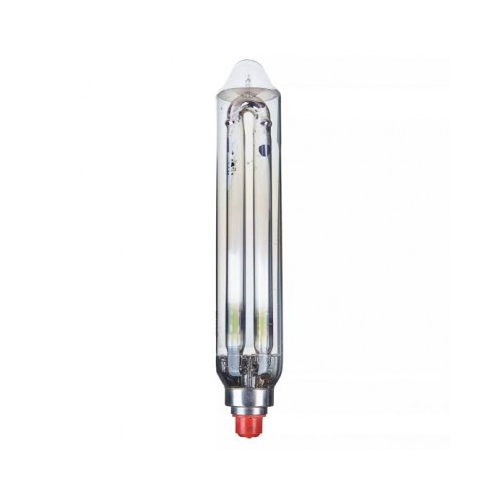
The Sodium Lamp 35 Watt Low Pressure is a high-efficiency discharge lamp designed for laboratory experiments, optical studies, spectroscopy applications, and scientific research. It produces a characteristic monochromatic yellow light, making it ideal for educational and analytical purposes.
FEATURES
Low pressure sodium vapor technology
35 watt power rating
High luminous efficiency
Stable monochromatic light output
Long operational life
Reliable laboratory performance
APPLICATIONS
Physics laboratories
Spectroscopy experiments
Optical research studies
Educational institutions
Scientific demonstrations
BENEFITS
Provides clear monochromatic illumination
Suitable for precision optical experiments
Energy efficient operation
Long service life
Reliable and consistent performance
Exceptional Efficiency and DurabilityThis low-pressure sodium lamp offers high luminous efficacy with minimal power consumption, making it an ideal choice for extensive outdoor use. With up to 18,000 hours of operation, frequent replacements are minimized, reducing maintenance costs and downtime. Its construction with borosilicate glass ensures resilience in harsh environmental conditions.
Optimized for Outdoor ApplicationsDesigned for universal mounting, the sodium lamp adapts to varied fixture designs with either G13 or B22d bases. Its powerful yellow light enhances visibility and penetration in foggy or dusty environments, improving safety on roadways, in industrial areas, and for security lighting purposes.
Safety and Environmental ComplianceContaining mercury, this lamp requires careful handling and responsible disposal to ensure environmental safety. Only trained personnel should manage installation or replacement, and fixtures should be checked for compatibility with the lamp's voltage and design parameters for safe operation.
FAQ's of Sodium Lamp 35 Watt (Low pressure):
Q: How should the 35W low-pressure sodium lamp be installed for optimal performance?
A: The lamp is designed for universal operating positions, so it can be installed horizontally or vertically, depending on your fixture requirements. Ensure compatibility with the base type (G13 or B22d) and verify the voltage (220-240 V AC). Only qualified personnel should install or replace the lamp due to mercury content and to ensure safety.
Q: What are the recommended applications for this sodium lamp?
A: This lamp is best suited for street lighting, tunnel illumination, security lighting, and industrial area lighting. Its high luminous efficacy and monochromatic yellow light make it especially effective in outdoor environments and where visibility in fog or dust is crucial.
Q: Why does the lamp have a very low color rendering index (CRI of -44) and what does it mean for usage?
A: A low CRI indicates the lamp emits a nearly monochromatic yellow light, which means colors will not be accurately rendered under its illumination. This is intentional for sodium lamps, as it maximizes energy efficiency and visibility in outdoor and street lighting, rather than for color-critical applications.
Q: When should I replace the sodium lamp, and what is its expected lifespan?
A: The lamp boasts an average life of up to 18,000 hours. It's recommended to monitor light output and replace the lamp if significant dimming or flickering occurs before this interval, or at scheduled maintenance to prevent outages.
Q: What precautions should be taken when handling or disposing of this lamp?
A: As the lamp contains mercury, avoid breaking the glass envelope and always handle with care. Use protective gloves and follow local environmental regulations for disposal or recycling of mercury-containing lamps.
Q: Can this sodium lamp be dimmed or used with lighting control systems?
A: No, this 35W low-pressure sodium lamp is non-dimmable and should not be used with dimming circuits or standard lighting controls, as this may damage the lamp or reduce performance.
Q: What are the operational temperature and humidity limits for this lamp?
A: This lamp operates reliably within temperatures of -40C to +50C. Ensure the environment does not exceed these limits for optimal lifespan and performance.






 Send Inquiry

 Send Inquiry
 Send Inquiry
 Send SMS