About Mirror Plane
MIRROR PLANE
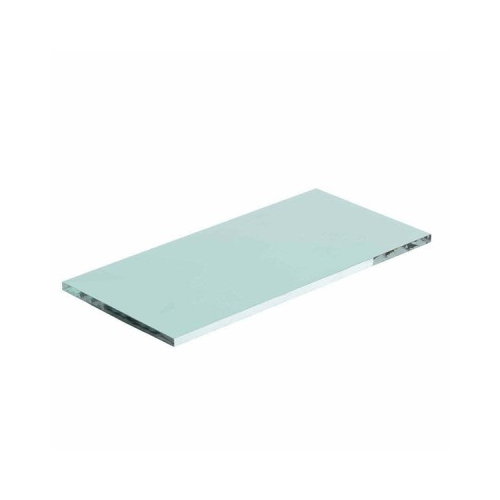
The Mirror Plane is a high-quality optical component designed for reflection experiments, light path demonstrations, and precision optical studies. It provides a flat reflective surface for accurate observation of reflection principles and is widely used in physics laboratories, educational institutions, and research applications.
FEATURES
High quality reflective surface
Optically flat construction
Durable and long lasting design
Accurate reflection performance
Smooth and polished finish
Suitable for laboratory applications
APPLICATIONS
Physics laboratories
Optical experiments
Educational institutions
Research laboratories
Light reflection studies
BENEFITS
Provides clear and accurate reflections
Supports optical learning and research
Easy to handle and maintain
Reliable laboratory performance
Suitable for repeated experimental use
Exceptional Reflectivity for Precise Optical TasksWith a reflectivity exceeding 96% in the visible spectrum, this optical mirror plane is ideal for tasks such as optical alignment and beam steering. The advanced aluminized or silvered coating, combined with a protected finish, ensures minimized signal loss and consistent performance in demanding research environments.
Robust Construction and High AccuracyCrafted from durable stainless steel and glass, the mirror maintains optical integrity and high precision over time. The 60-40 scratch-dig specification and precision ground surface offer both longevity and immaculate clarity, essential for meticulous scientific work in laboratories.
Versatile Mounting and Custom SizingThe mirror is available with kinematic adjustable mounts, allowing fine-tuned alignment. Dimensions can be tailored to your requirements, and both rectangular and circular shapes are supported. The sealed protective covering ensures safe transport and storage, preserving surface quality.
FAQ's of Mirror Plane:
Q: How do I adjust the Mirror Plane during optical alignment in my laboratory setup?
A: The Mirror Plane comes with a kinematic adjustable mount that allows precise manipulation of its position. You can make fine adjustments manually to ensure optimal alignment and beam steering within your optical path. Locking mechanisms help maintain the desired setting during operation.
Q: What benefits does the 60-40 scratch-dig surface quality offer in research applications?
A: A 60-40 scratch-dig surface quality provides a high level of optical clarity and minimizes imperfections. This standard ensures that the mirror offers consistent, high-precision reflection, which is crucial for reducing signal distortion in sensitive laboratory experiments.
Q: When is it recommended to use aluminized versus silvered coatings?
A: Aluminized coatings are generally preferred for durability and broad wavelength reflectivity, while silvered coatings offer superior reflectivity within the visible spectrum. The choice depends on the specific spectral requirements and operating conditions of your research application.
Q: Where can the Mirror Plane be used within a laboratory or research environment?
A: The Mirror Plane is ideal for optical tables, laser systems, and experimental setups requiring precise optical path adjustments. Its customizable size and robust construction make it suitable for both benchtop experiments and integrated optical devices.
Q: What is the process for customizing the shape and dimensions of the Mirror Plane?
A: To customize the Mirror Plane, provide your required dimensions (length, width, height) and preferred shape (rectangular or circular) when placing an order. The manufacturer will tailor the product to fit your laboratory's specific needs before dispatch.
Q: How does the sealed protective covering benefit storage and transport?
A: The sealed protective covering safeguards the mirror's precision ground, protected surface from dust, abrasion, and handling damage during storage and transportation. This ensures the mirror arrives in optimal condition and maintains its performance over time.
Q: What makes the Mirror Plane suitable for manual operation and optical path measurement?
A: The manual automation grade enables hands-on adjustments with high accuracy using the kinematic mount. The mirror's precision and stability are designed for reliable optical path measurement and adjustment, with compatibility for both analog and digital display systems.






 Send Inquiry

 Send Inquiry
 Send Inquiry
 Send SMS