About E M By Thomson Method
E M BY THOMSON METHOD APPARATUS
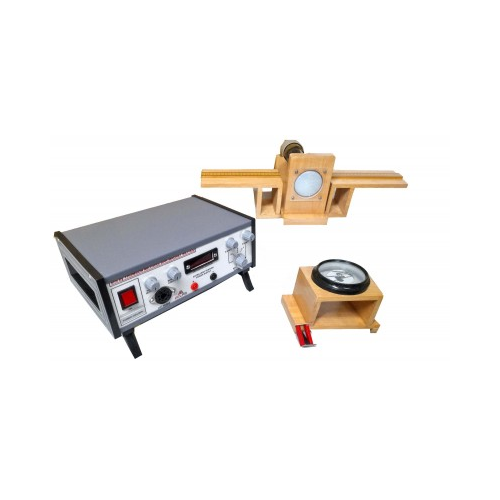
The E M By Thomson Method Apparatus is a physics laboratory instrument designed to determine the charge to mass ratio of an electron using Thomson's experimental method. It is widely used in educational institutions, research laboratories, and physics departments for demonstrating fundamental electron properties and electromagnetic principles.
FEATURES
Precision experimental setup
Accurate measurement capability
Durable laboratory construction
Easy to operate and calibrate
Suitable for educational demonstrations
Reliable performance for laboratory experiments
APPLICATIONS
Physics laboratories
Engineering colleges
Universities and educational institutions
Research laboratories
Scientific training centers
BENEFITS
Demonstrates electron charge to mass ratio determination
Enhances practical understanding of physics concepts
Provides accurate experimental results
Supports advanced laboratory studies
Long service life and dependable operation
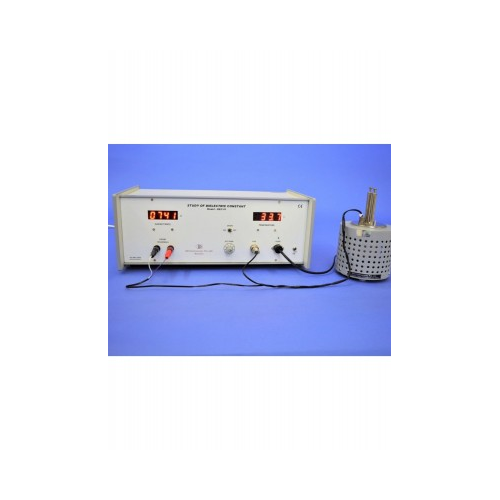
Comprehensive Physics ApparatusThis equipment is essential for physics laboratories conducting charge-to-mass ratio experiments. With a well-constructed solenoid, sensitive electron tube, and robust power supply, users obtain reliable measurements. Rotary knobs make current and voltage adjustments straightforward, while analog display facilitates clear result reading. Designed with safety in mind, overload protection and a fused input ensure secure operation throughout each session.
User-Friendly FeaturesThe E M By Thomson Method EMT-1123 stands out for its ease of use. It comes with connecting leads, a user manual for step-by-step guidance, and a corrosion-resistant finish for longevity. Its compact design allows for easy table-top mounting, and natural air cooling maintains performance during extended laboratory use. Designed to be operated manually, it provides precision while being straightforward for both students and instructors.
FAQ's of E M By Thomson Method:
Q: How does the E M By Thomson Method apparatus determine the charge-to-mass ratio of an electron?
A: The apparatus uses a high-sensitivity electron tube and solenoid to produce a magnetic field. By adjusting the current and voltage, students observe the deflection of the electron beam, allowing calculations of the e/m ratio based on observed motion and applied settings.
Q: What safety features are incorporated into the equipment?
A: The equipment includes fused input and overload protection to safeguard users and internal components against electrical faults or overcurrent scenarios, ensuring a secure laboratory experience.
Q: When is this apparatus typically used in the laboratory?
A: This instrument is commonly used during physics laboratory sessions when students or researchers need to experimentally determine the charge-to-mass ratio of an electron, often as part of foundational studies in electromagnetism.
Q: Where should the E M By Thomson Method EMT-1123 be placed during use?
A: Designed for table-top mounting, the apparatus should be set up on a stable laboratory bench, ensuring it is near a 230 V AC power supply and away from excessive heat or moisture.
Q: What process should users follow to obtain accurate results?
A: Users should connect the provided leads according to the manual, set the operating voltage and current with the rotary knobs, and align the electron beam properly within the calibrated solenoid. Observations are then recorded and calculated as per the stepwise instructions.
Q: How does the construction and material benefit laboratory users?
A: The durable mild steel body with powder coating offers corrosion resistance, extending the operational lifespan of the equipment. Natural air cooling ensures reliable performance without additional maintenance, making it suitable for repeated educational use.







 Send Inquiry

 Send Inquiry
 Send Inquiry
 Send SMS
 Call Me Free